
The decision that shapes a workshop portfolio is usually made long before anyone frames a photograph. It lives in the itinerary. When an operator designs a trip around transport windows, lodging blocks, meal timing, permits, and sunrise access, the schedule itself becomes the primary instructor, and it teaches coverage rather than craft. Understanding that tradeoff is the first step toward choosing a format that actually builds a body of work.
The Overlooked Cost of Scale
Large tours solve a genuinely hard problem: moving many people, safely and on time, through logistically demanding places. That competence comes at a price paid in individual attention. The larger the group, the more of the leader's energy flows toward staging, headcounts, and keeping the day on schedule, and the less remains for reading a participant's frame against the light in front of them.
Consider the arithmetic of a single overlook at blue hour. The most useful shooting window there may run closer to 20 to 45 minutes than a full morning. A bus-scale group can spend a meaningful part of that window on tripod placement, gear checks, and gentle crowd management before anyone reviews a composition seriously. The window closes while the group is still settling.
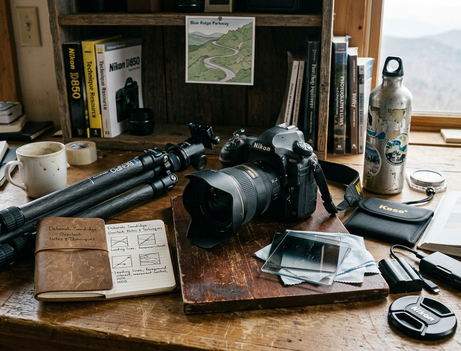
Iconic sites compound the problem. When two dozen photographers arrive at the same railing, the physical geometry of the place funnels everyone toward one obvious angle. Portfolio development, by contrast, depends on the freedom to return to a subject under changed light, to wait for a cleaner gesture, or to rebuild the frame from a different edge entirely. Those choices grow difficult when the group is already due at the next location.
Critical Insight: A crowded viewpoint does not just limit space — it standardizes vision. The frame everyone can reach is rarely the frame that distinguishes a portfolio.
How Personalized Critique Accelerates Skill
A common question from advancing photographers is why their images plateau after years of travel. The answer often lies in the length of their feedback loop. Growth accelerates when the loop tightens: the photographer makes a frame, an instructor reads it on location, and the photographer tries again while conditions still hold.
In a small workshop, that entire cycle can happen inside one shooting block. A field critique delivered while the tide, cloud movement, street activity, or subject position has not yet changed completely lets the photographer act on the note immediately. Advice saved for a final-night slideshow arrives too late to change any exposure that mattered.
Reviewing candidates, not verdicts
For experienced participants, the most productive review rarely examines a single finished image. It examines three to six candidate frames from the same scene, comparing how a shift in edge control, foreground weight, or motion blur alters the reading. That comparative habit — holding several near-solutions against one another, is where technique becomes deliberate rather than accidental.
Space to iterate without group pressure matters just as much. When no one is waiting on your tripod, you can reshoot the same idea at least once after feedback, testing whether the correction actually improved the frame. Iteration is where a note turns into a skill.
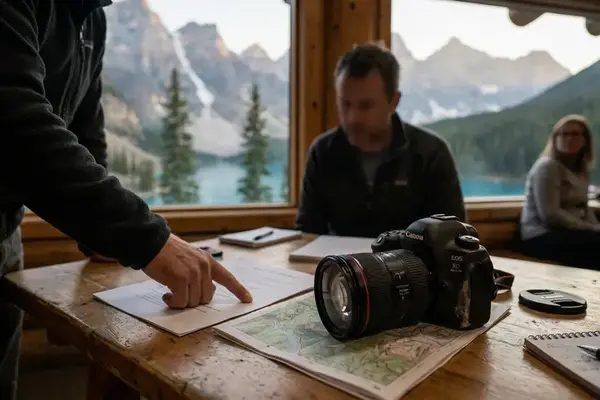
Small formats also make room for guidance that addresses individual artistic goals. A photographer pursuing quiet, tonal long exposure work needs different counsel than one chasing kinetic street gesture, and an instructor with a manageable group can hold both intentions in mind rather than teaching a single generic recipe. Practitioner accounts of place-based instruction suggest as much — the tailored note is what participants remember months later.
Comparing Workshop Formats in Practice
The difference between formats becomes concrete in how a day is structured. A high-volume format rewards coverage: arrive, photograph the obvious angle, move on. A small-group format can reward refinement: stay, observe, and rebuild. Neither is inherently virtuous, but they produce noticeably different portfolios.
A location-heavy day often includes several transfers between shooting sites. Each transfer eats into the uninterrupted time available for critique, tripod adjustment, filter testing, and quiet observation. The itinerary looks rich on paper and thin in the edit.
A depth-focused day inverts that ratio. Spending an entire morning or afternoon within a limited radius lets participants revisit foreground choices, reconsider exposure strategy, and refine motion blur across changing conditions. The same scene, seen three times under evolving light, teaches more than three unrelated scenes seen once.
The evidence appears in sequencing
The clearest signal shows up when you lay the images out. Small-workshop participants tend to leave with groups of related frames that share mood, visual rhythm, and technical intent. High-volume participants more often return with isolated souvenirs from unrelated stops — competent individually, incoherent as a set. A portfolio is a sequence, and sequences are built by staying, not by counting locations.
Group size alone does not guarantee this outcome, and honesty about the topic requires naming that limit. A ten-person group can still produce weak portfolios when everyone lines up at the same viewpoint and is encouraged toward the same composition. Depth is a function of teaching design, not merely a smaller headcount.
Risk Factor: Subject matter changes the calculus. Wildlife, night, long-exposure, and travel-street work each demand different pacing — how much waiting, access control, equipment setup, and image review the subject requires should shape the ideal group size before any cap is chosen.
Choose Depth Over Breadth
Begin the selection with the learning design, not the destination list. A beguiling map of famous stops tells you almost nothing about how much your photography will grow; the structure of the days tells you nearly everything. Ask how each morning and afternoon is actually spent.
Three questions separate a teaching workshop from a premium sightseeing itinerary. First, is there a stated enrollment cap? For portfolio-oriented travel, an eight-to-ten-participant range is a practical upper limit to ask about when comparing formats. Second, is one-on-one review time scheduled into the program, rather than offered informally at meals or after the final session? Scheduled critique is a commitment; informal critique is a hope.
Third, judge the promised outcome by cohesion, not count. A stronger result is a unified edit of images that can sit together in a portfolio section — not a folder organized by the number of destinations visited. If a workshop's marketing leads with the length of its location list, treat that as a signal about its priorities.
One caution deserves repeating: a small workshop is not automatically superior. If the instructor does not teach actively, avoids critique, or builds the trip as a luxury tour with cameras, the intimate group size delivers little. The cap is a precondition, not the point.
So here is the position worth standing behind. Book the workshop that spends a whole session in one place with an instructor who will sit beside your candidate frames and push you to reshoot before the light turns. Trade the long itinerary for the deep one, cap your group at ten, and measure the trip by whether you came home with a set of images that belong together. That is the workshop that builds a portfolio — everything else builds a photo album.



Reader Comments
The conversation starts with you.
Your Comment