
The Expectation of Constant Capture
Many photographers arrive at a workshop expecting every hour to involve active shooting.
This assumption equates value directly with time spent behind the camera. Settings mastery alone rarely produces the largest leaps in image quality. A standard workshop rhythm typically involves a pre-dawn field session, a breakfast download or backup period, a midday review, and a late-afternoon return to the location. Tension frequently builds during non-shooting blocks that last somewhere around 45 to 90 minutes. Participants often feel they are losing valuable light rather than consolidating their creative decisions.
Risk Factor: A participant spends every available minute shooting but repeats the same crowded foreground, clipped highlight, or unclear subject because no one has interrupted the pattern with a formal review.
Chasing the blue hour without pausing to evaluate the results leads to a high volume of redundant files rather than a real measure of success.
Feedback Sessions as Technical Accelerators
Group review exposes blind spots in composition and exposure choices.
Critique functions as a strict technical decision loop. The maker shows an image and explains their intent. Peers identify where the frame contradicts that intent, and the photographer adjusts the next field attempt accordingly. Operational details surface rapidly during these sessions. Discussions isolate specific variables like exposure choice, edge control, tripod height, foreground weighting, highlight management, and whether the eye is being led to the intended subject.
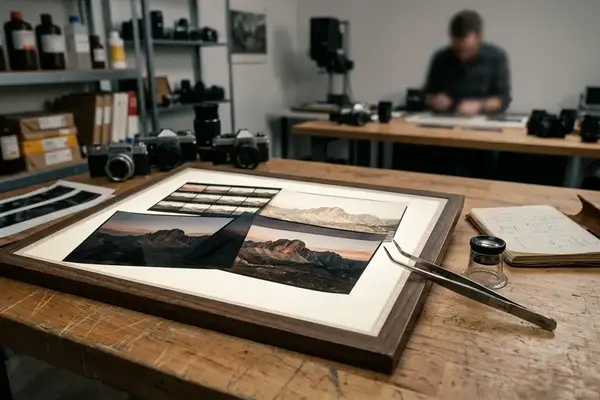
A reliable method for accelerating this loop involves comparing the original capture, a cropped version, and one alternate frame from the same scene rather than discussing only the final edited image.
Critical Insight: The strongest evidence of progression comes from same-day transfer, where a morning composition problem is named in critique and corrected during the evening field session.
Conversations That Reframe Approach
Unstructured talks surface alternative workflows and gear considerations.
Insight often arrives sideways—one photographer mentions a field failure, another explains a workaround, and the group quietly updates its own habits before the next location. These informal exchanges tend to happen during van rides, trail pauses, battery swaps, file backup periods, or while people compare LCD previews away from the instructor’s formal demo. Stories of past failures clarify exactly when established rules can be broken.
Cross-pollination of ideas occurs without a viewfinder present. A participant might explain the benefit of using a longer lens to simplify a chaotic shoreline. Another might advocate waiting for a distinct cloud edge instead of forcing contrast later using Nik Silver Efex Pro or Nik Color Efex Pro. Group feedback indicates that removing a filter when flare becomes more damaging than the original exposure problem is a lesson learned faster through peer conversation than solitary trial and error.
Meals and Downtime as Integration Periods
Relaxed settings allow the absorption of morning field lessons.
Downtime serves as a critical integration period. Morning technical corrections become usable because participants have enough conversational space to connect them to place, weather, and light. Contextual details emerge naturally over food. Photographers discuss where shadow lines crossed a foreground, when wind made a long exposure impractical, which direction haze softened the background, or why a location improved after direct light left the subject.
Social bonds reduce hesitation during later critique rounds.
Meal conversations turn critique from a performance into problem-solving because participants have already heard each other describe frustrations, missed frames, and equipment limits in a lower-pressure setting. Finding the right balance depends heavily on the audience. An advanced long exposure group may gain more from comparing filter choices and wind behavior at lunch, while a beginner group may need more in-field repetition before critique becomes actionable.
When Field Time Still Matters
Technical drills remain essential for building muscle memory.
Field practice remains a genuine necessity for repeatable handling decisions. Photographers must physically execute focus placement, neutral-density timing, bracketing discipline, and tripod leveling. Adapting when light changes faster than the planned composition requires instinct built through repetition. Community insights reach their full effect only after deliberate practice anchors them in reality.
Workshops succeed when both elements receive equal weight.
A balanced workshop review should look for evidence that participants applied a critique point in a later capture, not merely that they agreed with it during discussion. Field time builds reflexes, while critique and conversation make those reflexes more selective instead of merely faster.
Recommendation: This framework applies strictly to workshops designed around creative growth and technical refinement; location-scouting trips or access-based tours may reasonably prioritize shooting time more heavily.



Reader Comments
The conversation starts with you.
Your Comment