
Coastal long exposures with a 10-stop ND filter do not begin with the filter. They begin with a hard question: what must stay sharp, what must move, and how much daylight can the file survive before the scene loses structure?
Daniel Pierce frames the method as a field sequence rather than a preset. The coast gives the photographer reflective water, moving foam, pale stone, wet pavement, and sky brightness in the same frame. A 10-stop ND filter can make those elements coherent, but it can also expose every weakness in setup, timing, and stray-light control.
In this Article
- The Coastal Exposure Problem
- Deploying the 10-Stop ND Filter
- Blue Hour Workflow and Field Decisions
- Images That Reveal the Invisible
The Coastal Exposure Problem
The meter reading is only the opening argument
The coastal exposure problem was defined in the field, not from a generic daylight rule. The working sequence began with an unfiltered meter reading that protected sky detail, then the water texture received separate judgment. If the rear histogram preview showed highlight clipping above roughly 2% of the frame area, that base exposure was rejected before any dense filtration entered the discussion.
That standard sounds strict until a bright shoreline enters the frame. White surf and cloud edges can look acceptable on the camera screen while the file has already lost tonal separation. Once a 10-stop ND filter stretches time, that loss becomes harder to hide because the smoothed water no longer distracts from damaged highlights.
Critical Insight: A long exposure should not rescue a weak base exposure. It should extend a controlled one.
Why ordinary shutter speeds collapse at the coast
A standard shutter speed records waves as broken fragments. It freezes foam in one place, catches another wave in transition, and leaves the eye with activity rather than motion. For documentary work, that can be useful. For a long exposure photograph designed around mood, it usually feels unresolved.
Training logs show the daylight-to-blue-hour conflict was tested across the 2024 season, when European coastal civil-twilight windows were long enough to compare bright surf, promenade lighting, and cloud movement. That range mattered because the same beach edge could behave like three different scenes within one evening. Afternoon water demanded density. Blue hour sometimes supplied enough natural dimming to reduce the pressure on shutter length.
Color casts and light leaks remained the practical hazards. A technically correct 10-stop calculation can still fail when side light enters the viewfinder or filter holder, producing a pale vertical smear that no contrast adjustment fully removes. This is not a theoretical nuisance; it is the kind of flaw that survives careful editing and becomes obvious in a portfolio print.
Deploying the 10-Stop ND Filter
Comparing the Singh-Ray Mor-Slow and Lee Big Stopper
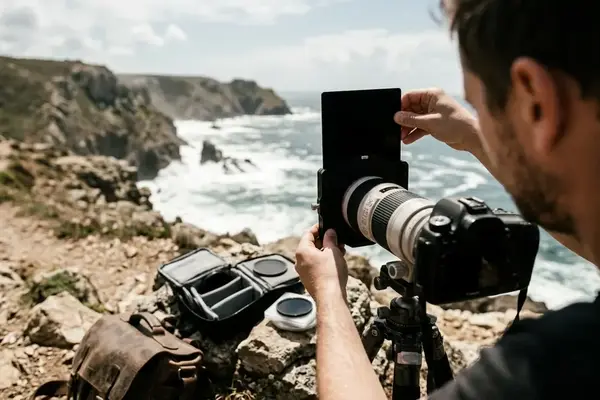
The Singh-Ray Mor-Slow and Lee Big Stopper were compared by photographing the same composition before and after filtration. The check was simple and unforgiving: sea foam, pale stone, and cloud base had to remain believable after the filter entered the optical path. If those elements shifted toward an unwanted cast, the file required correction before aesthetic decisions could begin.
Field experience revealed that filter density alone did not decide success. The comparison sets, gathered through the summer and autumn of 2024, covered clear afternoons, marine haze, and overcast coastal evenings. In clear conditions, even a small color bias appeared quickly in pale surf. In haze, contrast compression made the cast harder to isolate, so the sea foam became the more reliable reference point.
The filter-corrected shutter calculations were kept within a few percent of the NDTimer app-derived target before the final exposure was made. That cross-check prevented a common mistake: trusting either mental arithmetic or the app alone. A dense filter gives the photographer time, but it also removes the quick feedback loop that makes ordinary exposure correction easy.
Camera operations that have no romance and matter anyway
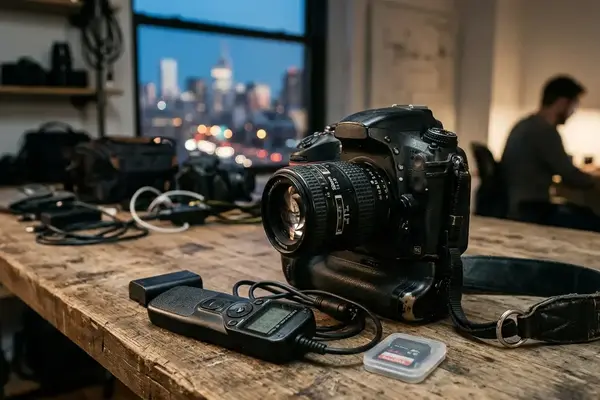
Bulb mode, mirror lock-up, and a remote trigger formed the operational core. These choices do not make the photograph more poetic. They keep the file from accumulating avoidable vibration during the exact interval when every railing, stone edge, and building line must hold position.
Custom white balance also mattered. Auto white balance often interprets dense filtration and cool coastal light as a problem to solve, then moves the file in a direction that breaks the evening mood. A custom setting created a stable reference across repeated exposures, especially when reviewing files made before and after filtration.
Risk Factor: This approach assumes the camera can run clean multi-minute bulb exposures without aggressive in-camera noise reduction doubling the wait after every frame.
The core field checklist stayed compact:
- Scout the composition before filtration and mark the tripod position before tide movement or crowd flow changes the frame.
- Meter without the ND filter, then convert shutter time manually and with NDTimer to catch calculation slips.
- Focus before mounting the filter, then switch to manual focus so the camera does not hunt through dark glass.
- Close the eyepiece shutter when stray light can enter from behind the camera.
- Review the histogram and the frame edges before moving the tripod.
Blue Hour Workflow and Field Decisions
Scout in warm light, expose in cool light
The practical workflow began during golden hour. That earlier pass identified tide reach, tripod footing, foreground hazards, and the direction of artificial light. The final exposure sequence waited until blue hour, when the sky and promenade lighting could sit in the same tonal conversation.
Observation data, based on community experience, supports a specific trigger point: final exposure attempts began when sky luminance fell to within approximately 15% of the brightest fixed artificial-light cluster in the frame. In a typical western-European coastal city setting, the operational shooting window on one August 2024 evening ran from roughly 19:41 to 21:06 local time. That window was not generous. It rewarded pre-scouting and punished indecision.
The Nikon D810 field setup
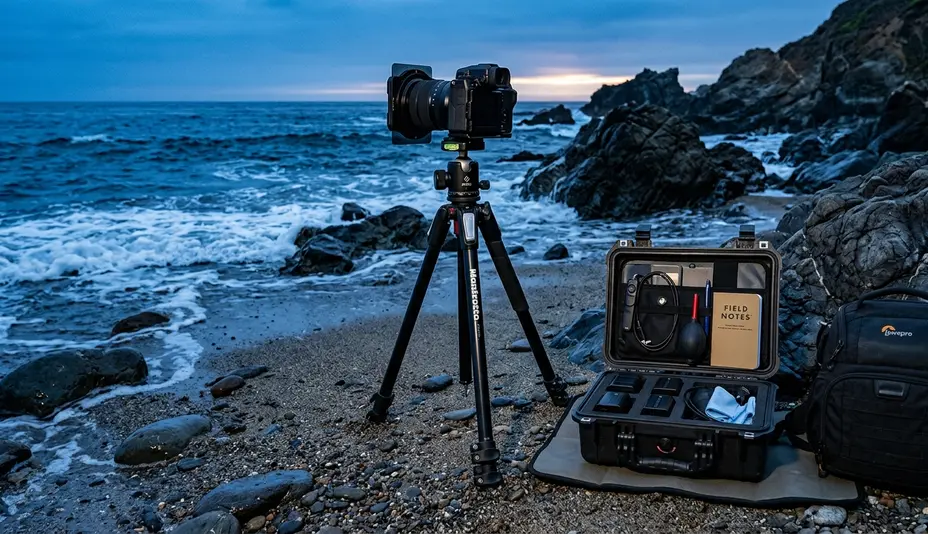
The working kit was direct: Nikon D810, 16-35mm lens, and an Induro tripod. The camera body supplied the resolution needed to evaluate stationary edge blur. The wide zoom allowed the composition to include water movement, promenade geometry, and sky without turning the frame into a stitched survey.
Small apertures helped produce starbursts from lamps and fixed promenade lights. They also created a trade-off. Very small apertures can make attractive light points, but they may soften fine stonework or distant architecture enough to weaken a portfolio-grade print.
Northern European coasts with extended twilight may permit smoother water without extreme shutter lengths. Southern harbours with brighter promenade lighting often require shorter exposures to keep lamps from blooming. The same 10-stop ND filter therefore behaves less like a universal answer and more like a controlled constraint.
Recommendation: Treat the blue hour setup as a timed sequence: composition first, focus second, filtration third, exposure last.
Images That Reveal the Invisible
Motion coherence matters more than maximum smoothness
The strongest coastal long exposures were not selected because the water became perfectly blank. They were selected because motion coherence held the image together. Water needed to read as atmosphere, while silhouettes, railings, rocks, and buildings still anchored the frame.
Group feedback indicates that city-coastal hybrids carried the most visual tension when silhouettes and car light streaks shared the frame with softened water. A promenade railing, for example, can give the viewer a fixed edge while traffic records time as a continuous line. The sea then becomes less literal and more structural.
Accepted final candidates had to keep stationary edge blur below approximately 3% enlargement drift at normal portfolio viewing size. That criterion protected the print from a familiar long-exposure flaw: beautiful water surrounding architecture that quietly falls apart.
Editing for mood without breaking the file
Post-processing concentrated on continuity rather than spectacle. Nik Color Efex Pro was used for glow enhancement, especially where promenade lights and blue hour sky needed a gentle relationship. Nik Silver Efex Pro remained useful as a tonal check when monochrome interpretation clarified whether the frame depended on color or structure.
The selected coastal-city hybrid files were edited across late 2024. That extended review period allowed mood consistency to be compared across multiple European shoreline locations. The aim was not to make every harbor look identical. It was to keep the language of light, water, and fixed architecture consistent enough that the work felt intentional.
The method has limits; it is strongest where coastal weather, artificial light, and camera behavior allow clean multi-minute exposures without turning the session into a waiting exercise. Within that boundary, the 10-stop ND filter becomes more than a dark piece of glass. It becomes a disciplined way to photograph what the eye senses but cannot hold: the slow movement of water, the weight of evening light, and the invisible passage of time through a coastal city.









Reader Comments
The conversation starts with you.
Your Comment