
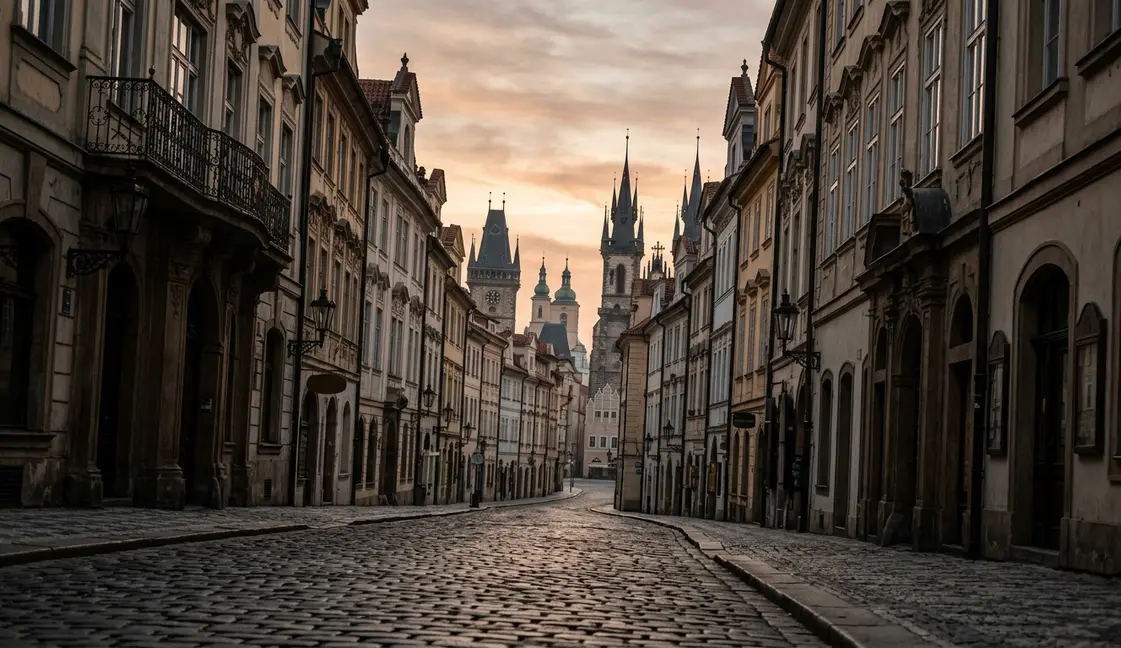
Can Prague's Bustling Streets Become Still and Ethereal?
Stand on a narrow approach to Charles Bridge at the wrong hour, and the scene resists you. People stream across the deck, vendors set up, a tour group clusters near the statues. The instinct is to wait for the crowd to vanish. It never does.
The more productive instinct is a reframing: treat the crowd as a moving layer rather than as the subject. In Prague, the fixed subject is almost always stone, iron, water, or reflected light. Pedestrians, trams, and reflections drift across that fixed architecture, and a long exposure lets you decide how much of that movement survives.
That decision has a measurable threshold. On the narrow approaches to the bridge, exposures in the 2 to 8 second range usually leave recognizable human traces, half-formed figures that read as clutter. Push into the 20 to 60 second band, and continuous foot traffic dissolves into haze, provided people keep moving. The tension between a packed street and the serenity you want is not solved by patience alone. It is solved by shutter duration.
Timing compounds the effect. The strongest serenity often arrives before the first dense walking wave, roughly 45 to 20 minutes before sunrise, when the lamps still carry warmth but the sky has begun to separate rooflines from each other. That window is short, and it rewards arriving early enough to compose in the dark.
Core Principles of Long Exposure for Urban Heritage
I work the exposure backward from the desired motion signature. The first question is not how long, but what should movement look like. Should people remain as ghosted forms, soften into ribbons, or disappear entirely into a gray veil? Once that motion signature is chosen, the shutter duration follows from it, and the neutral density filter follows from the shutter.
Choosing the Right Neutral Density Strength
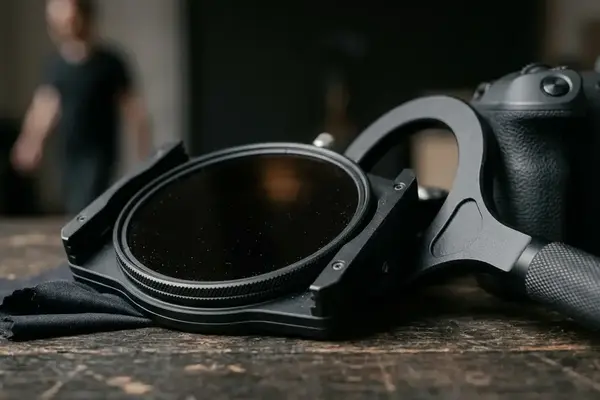
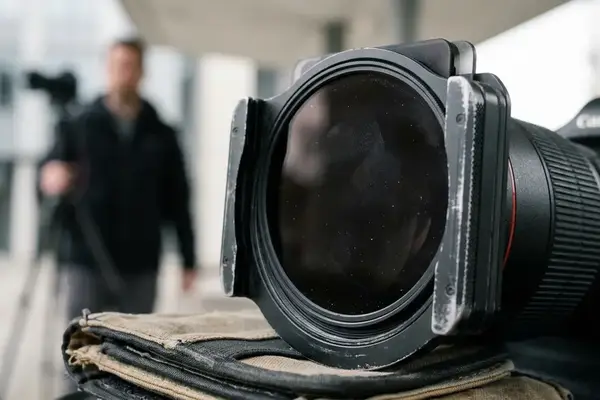
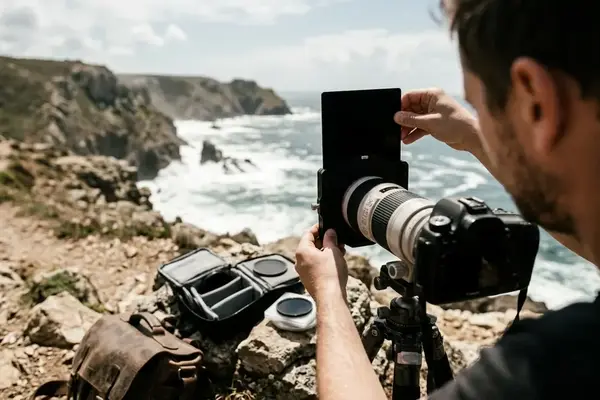
Filter selection is a function of available light, not a fixed habit. A 3-stop neutral density filter is often enough for twilight water smoothing during blue hour. A 6-stop becomes more useful in early morning or under overcast daylight. The 10-stop is reserved for brighter intervals when shutter times need to extend into multi-minute territory.
The catch is that no single filter is correct across a session. The same 6-stop that works beautifully in blue hour can be excessive in a shaded alley and insufficient on a bright riverbank just after sunrise. You carry the set and read the light each time.
Holding Architectural Detail
For architectural sharpness, a sensible starting point is ISO 64 or ISO 100, an aperture between f/8 and f/11, and manual focus checked on a high-contrast stone edge or lamp bracket rather than on a moving person. Gothic tracery and steep rooflines reward this discipline.
Critical Insight: If highlights on pale plaster or wet cobblestone begin clipping, shorten the exposure before closing past f/16. Diffraction at smaller apertures softens the fine roofline detail you came to record.
This matters more than it sounds at dawn. Prague's wet cobblestones can brighten faster than the sky during early morning, so highlight protection often outweighs shadow detail in the first test frame.
Strategic Vantage Points Along the Vltava and Beyond
I select locations by how motion enters and exits the frame. A bridge deck with pedestrians crossing laterally produces horizontal smearing. A lane leading toward a church tower creates depth-wise streaks that pull the eye inward. The same exposure length reads differently depending on that geometry, so the composition decision and the exposure decision are really one decision.
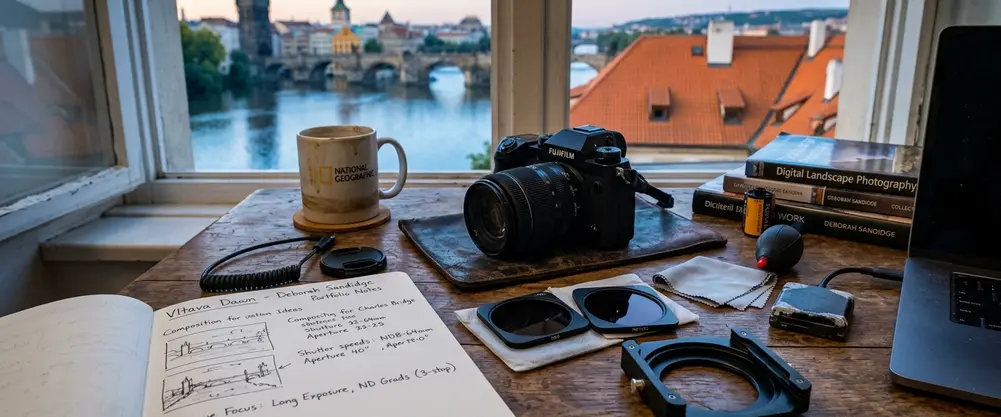
Near Charles Bridge, the cleaner long-exposure window is usually pre-dawn, especially from 45 minutes before sunrise until the first clustered tour groups arrive. Work that span deliberately. Compose, lock focus, and run your sequence before the bridge fills.
River Reflections and Gothic Facades
From the Vltava embankments, shutter times of 15 to 30 seconds can smooth small ripples while still holding recognizable lamp reflections on the water. Stretch too far and you lose the texture that gives those reflections their shape. If the river is already calm, longer exposures erase the very ripples that make a long exposure feel intentional rather than empty.
The lesser alleys off the main Old Town routes ask for a different patience. Rather than waiting for the street to empty, which it rarely does, watch for short pedestrian gaps of 10 to 25 seconds and time your release into them. A series of well-placed shorter exposures often beats one long gamble.
Practical Execution: Gear, Settings, and Crowd Navigation
The field sequence is deliberate, and the order matters. Plant the tripod first. Test for vibration. Compose around fixed architectural lines. Lock focus. Meter without the heavy filter if the scene is too dark to confirm exposure through it, then attach the filter and translate.
Stability on Cobblestones
Uneven cobblestone is the quiet enemy of a clean frame. Spread the tripod legs wider than you would on flat ground, and press each foot into a seam or a low point rather than balancing it on the rounded crown of a stone. A foot perched on a crown will creep during a 30-second exposure and you will not see it until you zoom in.
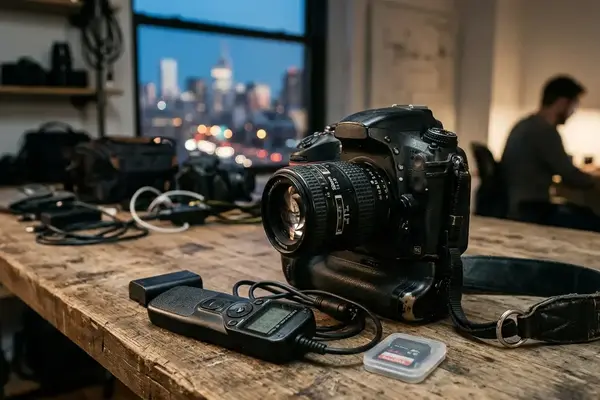
Vibration control is non-negotiable at these durations. Use a 2-second shutter delay or a remote release so your hand is off the body before the shutter opens. For exposures beyond 30 seconds, switch to bulb mode or timed long-exposure mode, and on optical bodies cover the viewfinder to block stray light leaks.
Risk Factor: A 60-second exposure on a bridge deck can look sharp in the buildings and still fail. Footsteps transmit subtle vibration through the structure into your tripod, blurring the frame in a way that is invisible until you inspect at full magnification.
Because of that, recheck your first frame at high magnification before committing to a longer sequence. Look specifically for tram vibration, bridge deck bounce, and wind movement in any hanging signs. One verified frame saves you from a wasted hour.
Working Around People
Scout the composition without the tripod first, so you are not standing in a narrow passage occupying space while you decide. In crowded historic zones, keep the tripod footprint narrow enough that pedestrians can pass without stepping over a leg. This is a safety consideration as much as a courtesy.
Scope and Practical Constraints of These Techniques
Sometimes the right call is to scale the idea down rather than force it. Field experience revealed that a stubborn commitment to a multi-minute exposure in marginal conditions produces marginal files. Knowing when to retreat to a shorter, achievable frame is part of the craft.
Weather sets hard limits. Light rain can be workable if you wipe the filter between frames. Wind-driven rain is a different problem, because droplets collect on the glass during the exposure and leave repeated soft spots that no amount of post can recover. A travel tripod that shakes in gusts removes the option entirely.
The filters themselves introduce constraints. Very dense neutral density glass can shift color, which means carrying a custom white balance or shooting a reference frame without the filter for correction. In Prague's historic core, permits and police barriers can also redraw your plan without warning, so a flexible second vantage point is worth scouting in advance.
Recommendation: Build a short field checklist before you travel. Scout the frame without the tripod, set ISO 64 or 100 with an aperture of f/8 to f/11, lock manual focus on a fixed stone or metal detail, and make one unfiltered reference frame for white balance before the filter goes on.
One honest caveat frames everything above. These techniques suit static architectural subjects. If the main subject itself is moving, a boat slipping under the bridge, a tram, a street performer mid-gesture, the long exposure may blur away the very point of the picture. Match the method to a stone-and-water scene, and Prague's streets do turn still and ethereal. Aim it at the wrong subject, and the technique works against you.




Reader Comments
The conversation starts with you.
Your Comment