
The Unexpected Power of Unpredictable Skies
Field experience revealed that a plain blue sky gives the frame little tonal hierarchy. Photographers must begin the creative decision by reading the sky as part of the subject rather than treating it as a passive background. Clear skies flatten scenes and remove mood. Storms, conversely, introduce motion and layered light that transform ordinary landscapes into compelling studies of atmosphere.
Fog improves depth when it sits between scene layers. Dense fog pressed directly against the camera, however, can erase the subject entirely and leave only low-contrast blankness. Fog is most useful photographically when it sits between layers of the scene rather than directly on the front element. Backlit fog at sunrise or late afternoon can reveal depth without adding hard shadows.
A dramatic forecast can still produce flat photographs if the storm deck becomes a uniform gray ceiling with no edge light, cloud separation, or foreground reflection. You have to anticipate the breaks in the weather.
Critical Insight: Storm light often changes fastest in the 10- to 25-minute window around a cloud break, so the composition is usually selected before the light arrives.
Long Exposure Techniques in Challenging Conditions
How do you determine the best shutter speed in heavy weather? You make the exposure choice after identifying the specific motion in the frame. Fast cloud streaks need less time. Slow fog drift needs more time. Wind-driven rain may call for a shorter exposure to keep the image crisp.
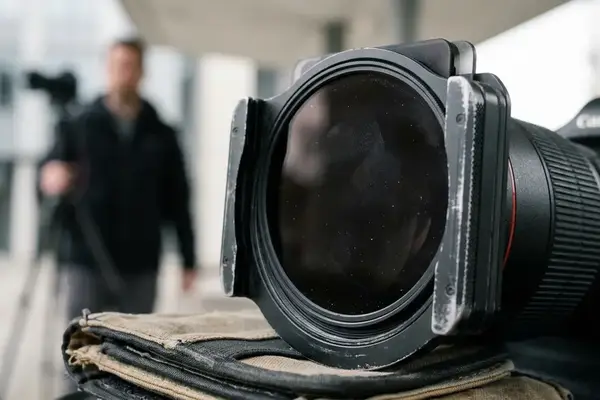
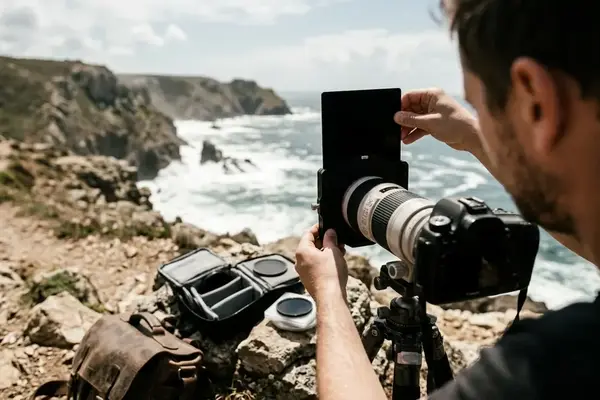
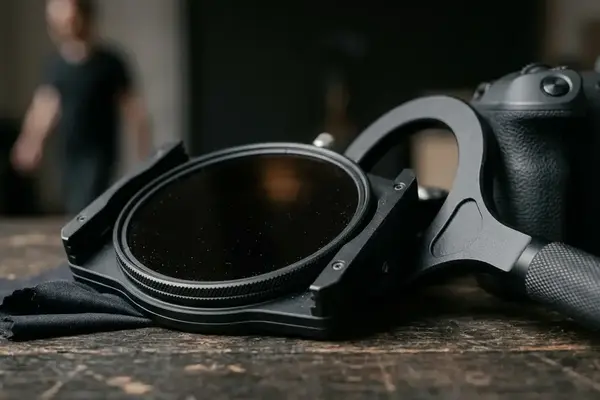
Useful storm-cloud shutter speeds commonly fall between 4 and 30 seconds. Fog movement may require 15 seconds to 2 minutes if the goal is a soft veil rather than visible streaks. A 3-stop or 6-stop neutral density filter is often enough in heavy weather to control the light. A 10-stop filter is more practical when the sky remains bright but the photographer wants multi-second cloud movement.
Long exposure is not automatically better in storms. If the shutter is too long, rain spots, vibrating foliage, and smeared cloud texture can make the file look accidental rather than intentional.
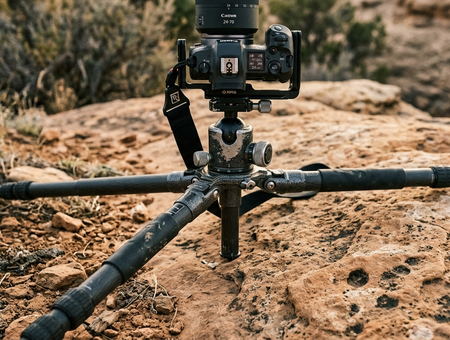
Tripod stability remains essential in wind and rain. In wind, keeping the tripod center column down, hanging no loose camera strap, and shielding the lens hood with the body or hand can matter more than adding weight to the tripod.
Destination Examples Shaped by Weather
Location decisions rely on matching weather behavior to subject shape. A familiar bridge or headland benefits from fog because the weather can hide clutter and reveal only the recognizable silhouette. Coastal fog is strongest visually when it alternately reveals and conceals the landmark.
Waiting through several 3- to 8-minute cycles, based on community experience, tends to produce a cleaner frame than shooting the first visible opening. Patience pays off in these environments.
Rain creates highly reflective surfaces in cities. Rain reflections usually read best from a low camera position, often between curb height and knee height, because the surface reflection expands toward the foreground. Processing these urban files later in Nik Silver Efex Pro or Nik Color Efex Pro helps extract the micro-contrast inherent in wet pavement.
Recommendation: Saturated storm color is most likely near sunrise or sunset when low-angle light passes under broken clouds, especially after rain has darkened rock, pavement, foliage, or sand. Pushing into the blue hour often yields the most dramatic tonal shifts.
Preparation and Practical Limitations
Preparation starts before the location visit with a sequence of weather checks. Broad forecasts dictate the initial planning. Short-range radar or satellite views refine the timing. On-site observation provides the final go or no-go decision. Regional meteorological stations inform our radar interpretation, emphasizing the need for layered data.
A practical planning rhythm is to review regional weather 36 to 72 hours before the shoot, refine the target area 12 to 18 hours before arrival, and make the final composition decision in the last 30 to 90 minutes on location.
Equipment protection requires strict discipline—carry two categories of cloth. Keep one absorbent cloth for the camera body and tripod, and reserve a separate clean microfiber only for the front filter or lens. In rain, change lenses inside a vehicle, building entry, or fully covered area. If that is not available, commit to one certified weather-sealed lens before walking into the exposure.
Risk Factor: Severe weather is not a creative prompt when the route out is uncertain, the tripod cannot be controlled, or lightning is close enough to reduce the time between flash and thunder to only a few seconds.
While these exposure guidelines provide a proven baseline, atmospheric density variations mean field adjustments are always required.






Reader Comments
The conversation starts with you.
Your Comment