
The Persistent Load of DSLR Equipment
When the Bag Starts Making Creative Decisions
For travel photographers, the weight of a DSLR system rarely announces itself at the airport counter. It shows up later, on the third staircase before sunrise, when a second body stays in the room because the day already feels long.
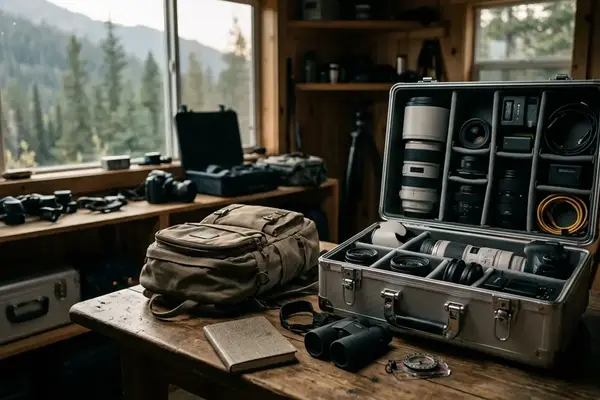
The practical burden from 2022 through 2024 was best understood as a carried system, not a camera-only comparison. Bodies, lenses, charger, batteries, filters, straps, rain cover, cleaning kit, and the bag itself created the working load. On flights, the issue became overhead-bin geometry and personal-item discipline. On long urban walks, uneven terrain, and dawn-to-night shooting days, the same equipment began to influence how far a photographer scouted and which compositions received serious attention.
Training logs show the most useful evidence came from behavior: which lenses stayed behind, how often a backup body remained unused, and whether scouting walks shortened after long travel days. That kind of record carries more value than a catalog weight comparison because it connects equipment to photographic choice.
Mobility as a Compositional Constraint
A heavy DSLR kit can still produce exceptional files. The question is whether it permits the photographer to be present when the frame appears.
Consider a blue hour walk through a hilly city after a transatlantic flight. A photographer may start with a wide zoom, a telephoto, filters, and a tripod. After an hour of stairs and narrow sidewalks, the telephoto stays in the bag. By the time reflected window light appears across wet pavement, the photographer reaches for the lens already mounted, not necessarily the lens that best interprets the scene.
Critical Insight: Equipment weight becomes artistically relevant when it changes timing, route choice, or willingness to revisit a location under better light.
This does not make the DSLR system deficient. It makes the system conditional. For photographers whose travel work depends on deliberate tripod placement and measured Long exposure sequences, the familiar DSLR body may remain productive. For fine-art travel work built around movement, changing light, and quiet observation, the physical cost can narrow the day before the camera leaves the bag.
Initial Switch to the Nikon Z Platform
The First Change Was Not the Body
The most common question is simple: did the Nikon Z platform reduce the travel burden immediately? The detailed answer is more useful than a yes.
The meaningful shift came from rebuilding the bag around access and movement rather than replacing one DSLR body with one mirrorless body. A practical Nikon Z travel comparison starts with one Z body, a backup option only when the trip requires it, a compact wide-to-telephoto range, batteries, charger, card wallet, and a mount adapter only when older optics have a defined purpose. The bag gets packed first for airport carry, then for trail access, then for repeated lens changes in public spaces.
That sequence matters. A lighter camera inside the same oversized bag, surrounded by the same unused accessories, leaves the photographer with nearly the same field problem.
Flights, Hikes, and Location Scouting
On flights, a smaller mirrorless kit improves organization more than glamour. The card wallet has a fixed pocket. Batteries sit where they can be removed before security checks if needed. Filters and cleaning tools no longer compete with duplicate chargers and legacy straps that entered the bag out of habit.
During hikes and scouting walks, the Nikon Z system changes handling in subtler ways. The camera comes out sooner because the bag opens more cleanly. A photographer can test a frame, read the light, and keep moving without the ritual weight of a full DSLR harness. Field experience revealed that the advantage became clearer across several departures rather than during a single weekend: airports, coastal weather, city interiors, and early-morning landscape scouting each exposed a different strength or weakness.
Risk Factor: Switching to a lighter body while keeping the same oversized lens set, tripod, duplicate chargers, and unused backup body can leave the travel workflow almost unchanged.
The better comparison asks whether the new kit reduces hesitation. If the photographer carries the camera during a scouting dinner, a ferry transfer, or a rainy walk between locations, the system has changed behavior. If the camera remains in the hotel room because the bag still feels like an assignment case, the platform shift has not reached the workflow.

Refinements in Field Workflow and Composition
From Review After Capture to Judgment Before Capture
A beginner moving from DSLR to mirrorless often notices the electronic viewfinder first as a novelty. The more advanced benefit appears later: the order of decisions changes.
With a DSLR, exposure judgment often depends on metering, experience, and rear-screen review after the frame. With a Nikon Z electronic viewfinder, the photographer can assess exposure preview, highlight behavior, and creative rendering before pressing the shutter. This matters in changing light: pre-dawn blue hour, backlit streets, interiors with window spill, reflective water, and scenes where fine-art exposure depends on preserving luminous highlights.
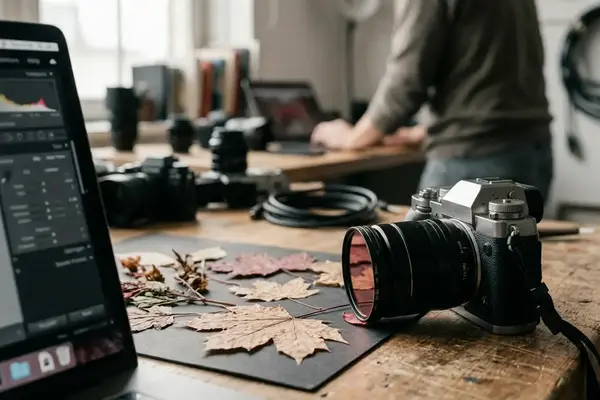
For photographers who use Nik Color Efex Pro or Nik Silver Efex Pro in the finishing stage, this preview changes capture discipline. The file still needs careful processing, but the field decision can anticipate contrast separation, luminous edges, and tonal compression. A scene intended for monochrome interpretation benefits when the photographer can protect highlight structure before the conversion begins.
Adapter Use Without Nostalgia
Lens compatibility deserves a sober treatment. A mount adapter can protect investment in existing optics, but it should not become a permission slip to carry every legacy lens.
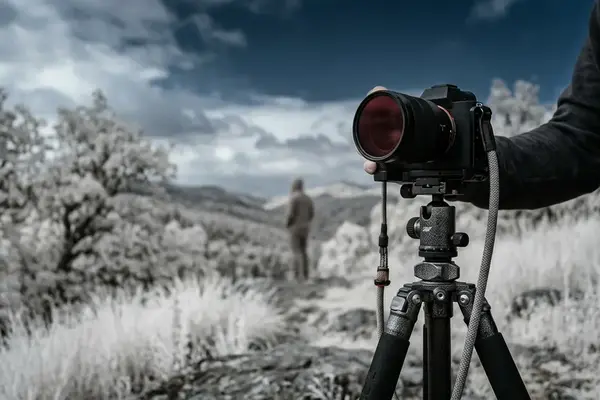
The practical rule is direct: pack adapted lenses only when they serve a planned use. A favorite specialty lens may justify its place for architecture, infrared work, or a specific Long exposure sequence. A heavy zoom carried because it once solved a different assignment may undermine the mirrorless advantage. The Nikon Z platform works best for travel when the lens plan supports the itinerary rather than the archive.
Battery and File Handling in the Field
Mirrorless travel also asks for a different field routine. The electronic viewfinder, image review, stabilization behavior, and frequent wake cycles all make battery planning more visible than it felt with many DSLR kits.
The routine should be simple enough to repeat while tired. Start each morning with charged spares. Keep one battery warm in cold conditions. Rotate cards before long hikes or boat transfers. Separate full cards from empty cards in different pockets or case slots so the file workflow does not rely on memory at the end of a twelve-hour day.
Recommendation: Treat batteries and cards as part of the composition workflow, not as administrative leftovers after the creative work ends.
That habit protects the day. It also reduces the mental drag that appears when a photographer must decide, in poor weather or fading light, whether the next frame belongs on a nearly full card or a battery already near depletion.
Scope and Boundaries of Mirrorless Advantages
Where Nikon Z Travel Workflows Gain the Most
The Nikon Z advantage is strongest when travel photography demands movement through mixed light. Long walking days, handheld compositions, interior-to-exterior transitions, and fine-art exposure choices all reward a system that stays accessible.
A fine-art city walk illustrates the case. The photographer may move from a cathedral interior to a reflective street, then to a rooftop at blue hour. The electronic viewfinder helps judge exposure before capture. A smaller carry system reduces reluctance to keep the camera on hand. The quieter presence of a mirrorless body can also matter in intimate spaces where the photographer wants to observe rather than dominate the room.
Observation data supports a practical conclusion: mirrorless benefits should be judged by creative readiness. Easier handheld scouting, faster exposure decisions, quieter operation, and less hesitation to carry the camera all connect the system to final-image possibility.
Where DSLR Preference Still Makes Sense
DSLR systems retain a valid place for photographers who prioritize optical viewfinders, very long battery endurance, familiar muscle memory, or an existing lens set that already solves the assignment without slowing movement. A remote wildlife-oriented itinerary, for example, may place lens reach, endurance, and established handling above compactness. A coastal dawn session may shift the calculation again if tripod work, filters, and weather protection dominate the morning.
The comparison should not become a loyalty test. It should remain a field evaluation.
The photographer needs to ask three questions before each departure: what light will define the work, how far the kit must travel on foot, and which lenses will genuinely come out of the bag. Those answers will vary between a city residency, a stormy shoreline workshop, and a route built around interiors with strict access rules.
Criteria for Continued Evaluation
A disciplined mirrorless evaluation runs across several trips and conditions, not one enthusiastic weekend. Three to six departures give the photographer enough variation to see how the system behaves in airports, coastal weather, city interiors, early starts, and long scouting days.
The criteria should stay concrete. Did the kit reduce fatigue by the end of the day? Did it increase the number of serious scouting attempts? Did the electronic viewfinder improve exposure decisions in difficult light? Did adapted lenses earn their space, or did they preserve an old habit? Did battery and card routines stay reliable under pressure?

The Nikon Z platform can improve travel workflow when it changes the photographer’s relationship to movement, light, and readiness. The gain is smaller when lenses remain large, the bag stays disorganized, or legacy accessories follow the photographer out of habit. That boundary is not a weakness of mirrorless design; it is the practical edge where equipment choice meets working discipline.






Reader Comments
The conversation starts with you.
Your Comment