
In this Article
- When the Print Table Moved Into the Hotel Conference Room
- The Warm Room That Changes Nothing at Dawn
- Getting One Portable Screen to Tell Everyone the Same Story
- Five Checks Every File Passes Before Anyone Says "Beautiful"
- Slider Moves Treated as Questions for First Light
- The Branch at the Upper-Right Edge
When the Print Table Moved Into the Hotel Conference Room
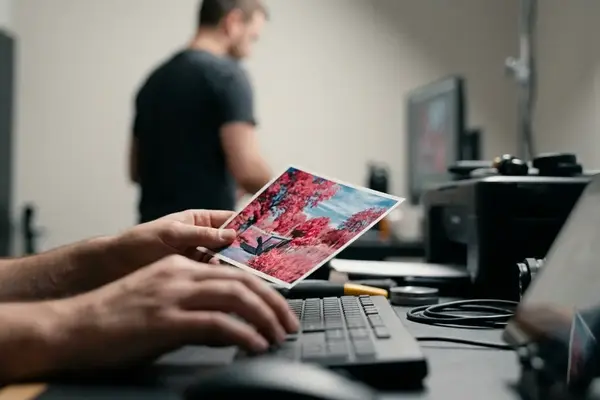
Group critique began at a print table. The light was stable, the prints were finished, and the review measured work that already existed. You could hold a print at arm's length, tilt it toward the window, and judge it on its own terms. If the verdict stung, there was time to absorb it before the next assignment or a grade weeks later.
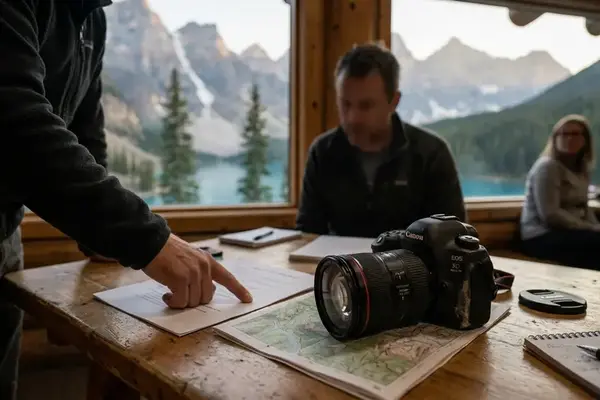
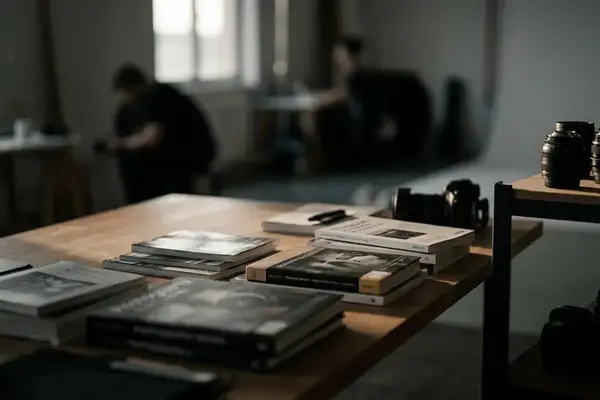
Multi-day field workshops changed the purpose of that ritual. Once the review left the classroom, it moved into whatever conference room the hotel assigned after the day's shoot. That might be a ballroom with half the chandeliers dimmed, or a meeting room with a window wall facing the parking lot. The review stopped being a verdict on finished work. It became the brief for a morning nobody had shot yet.
The first few evening sessions I sat through felt oddly familiar and oddly useless. We had the vocabulary of the print table and none of its conditions. A classroom review could wait for a later grade. A field review sits between two dawns, and the working interval runs from the evening session to the next departure in the dark.
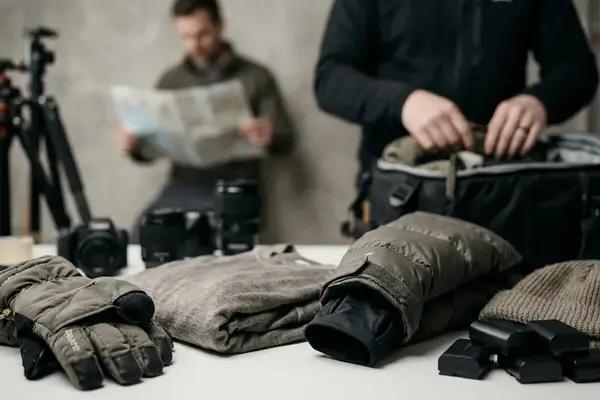
Anyone who has packed a tripod at 4:30 a.m. knows the pressure. Three things press on that room at once: mixed ambient light, portable displays with inconsistent brightness and viewing angles, and a table full of people who need sleep before another early start.
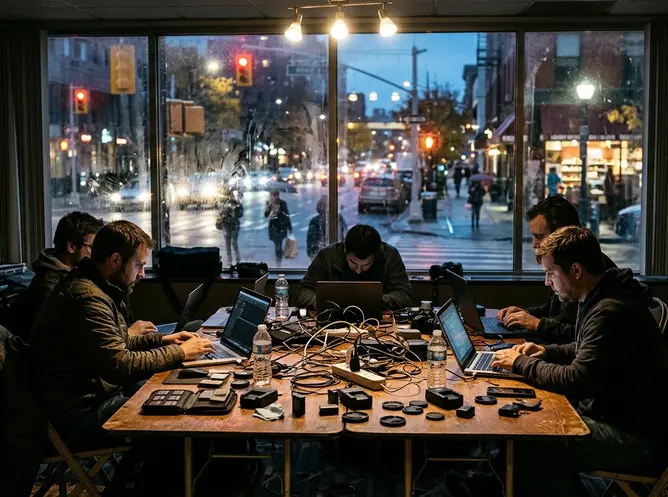
The practical consequence is simple. Every comment made in that room has to change where someone stands, what they meter, or which file they trust. The most useful review record ties the displayed file to its capture settings and to the location the photographer expects to revisit at dawn. Without that thread, the evening is just a slideshow.
The Warm Room That Changes Nothing at Dawn
Why can a critique session feel generous and productive and still leave the next morning's photographs exactly the same?
Follow one comment through to the next shoot. Someone looks at a lakeside frame from blue hour and says, "Beautiful atmosphere." Everyone nods. The photographer feels good. At dawn, they walk to the same spot, meter the same way, and make the same frame, because nothing in that sentence named a decision to change.
Now compare: "The bright cloud has lost texture. Check that highlight before you expose for the water." This one identifies an observable problem and hands over a field test. The real difference is whether the comment produces a different act at first light, regardless of how warmly the room receives it.
Useful comments name the failure in capture terms. Three kinds come up constantly:
- Highlight placement: cloud texture that may or may not survive in the raw file.
- Subject scale: a heron, a lighthouse, or a figure too small to own the frame.
- Mixed-light casts: a local color shift where warm practical lighting meets cooler ambient light, common in harbor and street scenes at blue hour.
There is a harder problem underneath the language one. A bright laptop in a dim ballroom flatters almost everything. A dark file looks adequately luminous when the screen is the brightest object in the room, and that hides exposure and tonal-placement mistakes. The same file that looked finished at 9 p.m. can fall apart in open shade or direct sun.
Before the Room Agrees
Group agreement about a glowing screen tells you about the screen. Compare adjacent views of the same file, ideally on two displays, before treating consensus as evidence. Different brightness and white points produce different judgments from the same pixels.
Getting One Portable Screen to Tell Everyone the Same Story
Start from first principles. A shared judgment can only be as stable as the shared image. In a hotel room, light arrives from at least three directions with three different characters: daylight or streetlight through the windows, warm practicals on side tables, and cool ceiling panels overhead. Each one shifts what the table thinks it sees, and each one shifts it differently depending on where a person sits.
So the setup comes before any participant file. In order:
- Reduce competing light where the room allows. Close curtains, kill the lamp nearest the display, and look for window reflections on the screen surface.
- Fix a shared viewing angle. Have people check visibility from their actual seats, not from where the leader stands.
- Bring the monitor down until the image stops glowing against the walls. It should sit in the room, not float above it.
- Disable automatic brightness, adaptive color temperature, and night-view modes before anyone makes a judgment.
- Open a neutral reference frame before the first participant file: one with neutral tones, textured highlights, and distinguishable dark values. Its job is to expose obvious viewing discrepancies.
Keep this check short. It should take minutes, not half the evening.
Two Setups, Same Room
Picture a laptop lid open in a bright corner. It reflects the window, and its apparent contrast changes as people lean in or sit back. Half the table sees crushed shadows; the other half sees a gray veil. Now turn a portable monitor on an angled stand so it faces away from the window wall. That single move removes one whole source of disagreement, and the reference frame confirms it: everyone can see the texture in its brightest patch.
One boundary matters here. This room-matching routine is not instrument-based calibration or profiling, so any subtle color decision meant for a final print still belongs in a controlled, color-managed review back home.
Five Checks Every File Passes Before Anyone Says "Beautiful"
If you are new to evening reviews, the open-taste format feels natural: show a file, let people react. The trouble is that early files absorb the whole evening in circling conversation, and the last few participants get thirty seconds and a shrug.
The progression away from that starts with a short, repeated set of checks tied to field decisions:
- Exposure headroom for the light expected at dawn.
- Subject separation from background tones.
- Edge clutter, inspected at fit-to-screen, then enlarged to tell a real intrusion from a small display artifact.
- Color that will hold once white balance is set on location.
- One intended emphasis, and whether it actually leads the eye.
Give each participant an equal slot, announced before the first file opens. The leader asks for the intended emphasis first, then walks the file through the same sequence. Every pass ends with one named change written down, such as "shift position to separate the silhouette from the dark treeline."
The roles stay plain. The leader holds the criteria steady across the multi-day sequence, so Tuesday's checks are Wednesday's checks. The participant brings the raw file and the shooting intention. No defense is required, and frankly none helps.
Close the Loop Each Evening
The next evening, pull up yesterday's file beside today's under the same viewing setup and the same review sequence. Only then can anyone say whether the named change worked.
Slider Moves Treated as Questions for First Light
Live processing in the room earns its place only as a test. The leader makes a restrained raw adjustment to check a specific diagnosis, and the group watches what the file answers.
Each slider asks a different question. White balance asks whether a cast is broadly correctable. Exposure and highlight controls ask whether bright texture remains. Local contrast asks whether weak subject separation is tonal or positional.
Take the highlight question, because it is the one that fools hotel rooms most often. A cloud looks white on the evening monitor. A rendered histogram or a blinking highlight warning reflects the current processing interpretation, which means neither one proves the raw capture clipped. Lower exposure and watch the bright area. If texture and plausible color return, the highlight survived in the field and only looks hot on screen. If the patch just turns flat gray, the data is gone, and tomorrow's exposure must protect it.
A global look that flatters the screen hides this distinction completely. A punchy preset, lifted shadows, and boosted vibrance make everyone happy and teach nobody anything about the cloud.
White balance has its own tell. One adjustment shifts the whole frame, so a warm patch that stubbornly remains near a lamp points to mixed illumination. That calls for a decision on location rather than a correction afterward.
From Slider to Instruction
Every test should end as a dawn instruction the session has already named:
- Meter the bright cloud, not the dark water.
- Step closer so the subject owns the frame.
- Wait until the dock light goes out.
- Shift angle to clear the edge.
Save It Before Bed
Write the instruction down before the session ends, somewhere you will see it before departure: the file annotation, a phone note, or your shooting brief. Instructions left in the room stay in the room.
The Branch at the Upper-Right Edge
The lobby is still dark when you step out ahead of the group. The coffee is too hot to drink, so you set it on the tripod case and open last night's note on your phone: Clear the branch at the upper-right edge. One spatial relationship, one action. You don't need to reopen the editing session to understand it.
At the shoreline, you put your eye to the viewfinder and go straight to that corner. There it is, the same dark twig that sat unnoticed on the laptop in the bright corner and showed up plainly once the angled monitor faced away from the windows and the file got enlarged during the edge check. The leader's local contrast test confirmed the problem was positional. No slider would fix it.
You take a half-step sideways. The branch slides out of the frame edge, leaving a clean gap of pale sky between it and the lighthouse, which still holds its place on the right third. You take your meter reading off the bright cloud, not the dark water, and press the shutter.
The first frame of the morning appears on the back of the camera: open sky in the upper right, texture in the cloud, the lighthouse alone where you meant it to stand. Behind you, headlamps start bobbing down the path, and your coffee has barely begun to cool.


Reader Comments
The conversation starts with you.
Your Comment