
The Historical Weight of Mileage in Portfolio Editing
The habit of equating geographic distance with photographic seriousness traces its roots directly to survey, expedition, and magazine travel photography. In those early contexts, distant subjects inherently signaled access and ambition. A photographer who returned from a remote canyon or an isolated coastline brought back images that carried the weight of the journey itself. As long-haul travel became cheaper and easier to book, workshop itineraries absorbed this historical prestige. The working portfolio inherited a quiet, proven standard where a wide spread of place names often outranked repeated, weather-tested frames from a single known site.
This dynamic shifted the definition of a successful shoot. Booking a distant shoreline began to stand in for depth of seeing. Photographers started treating a new stamp in the passport as a certified upgrade in portfolio quality, long before the actual images were evaluated for structural merit. The visual evidence of this shift appears clearly when you compare two distinct portfolio edits. Set one frame from each of several different destinations against several weather-tested frames from one specific coastline. The multi-destination edit often relies on the exotic nature of the captions to hold the viewer's interest, while the single-location edit relies entirely on the photographer's ability to solve complex visual problems.
After completing a tour, review the contact sheet thoroughly before using the destination count as evidence of progress. The sheer variety of pins on a map provides a false sense of accomplishment. A rigorous edit demands that the images stand on their own, stripped of the narrative of the travel required to capture them.
Separating Novelty from Structural Coherence
First-visit adrenaline produces a wide scatter of frames that feels like rapid progress. Every vantage point is unfamiliar, making every exposure feel promising. Booking calendars and tour marketing actively reward these unused destinations more than a stronger select from a site already walked. The excitement of finding unfamiliar viewpoints complicates the editing decision, as the photographer must separate the thrill of arrival from the actual quality of the captured light.
Novelty easily masquerades as originality. A new skyline frequently hides weak light, clumsy foregrounds, and unresolved structure. The photographer reacts to the scene rather than organizing it. The resulting images often serve as a record of being there rather than a deliberate composition.
Wait Before Flagging Selects
During a first visit, flag frames that feature a distinctive subject but suffer from an unresolved foreground or flat light. Do not promote these images to the final portfolio based on the location alone. Review those specific flags again 24 to 48 hours after returning home. The excitement of arrival dissipates over a couple of days, allowing you to evaluate the structural coherence of the frame with a much colder eye. The select still has to survive rigorous inspection for light, foreground placement, and overall balance.
Building Composition Through Successive Returns
Returning to a location converts weather, tide, season, and crowd timing from random accidents into compositional variables the photographer can actively manage. The first pass establishes basic coverage. These initial frames tend to be wide, documentary, and slightly tourist-leaning. Later visits allow the photographer to anticipate a specific tide line, wait for a useful wind direction, and choose light that clearly separates the foreground from the background.
Pre-visualization replaces scavenger hunting. The primary problem is no longer finding the place, but solving a specific light and structure problem inside it. Follow one composition through successive visits to see this evolution. Set a first-visit wide frame beside second-, third-, and fifth-visit frames from the exact same site. Look for a more deliberate foreground and a more precise color temperature in the later iterations. A first-visit coverage frame becomes a stronger series frame through tide knowledge, a chosen foreground, and deliberate color temperature.
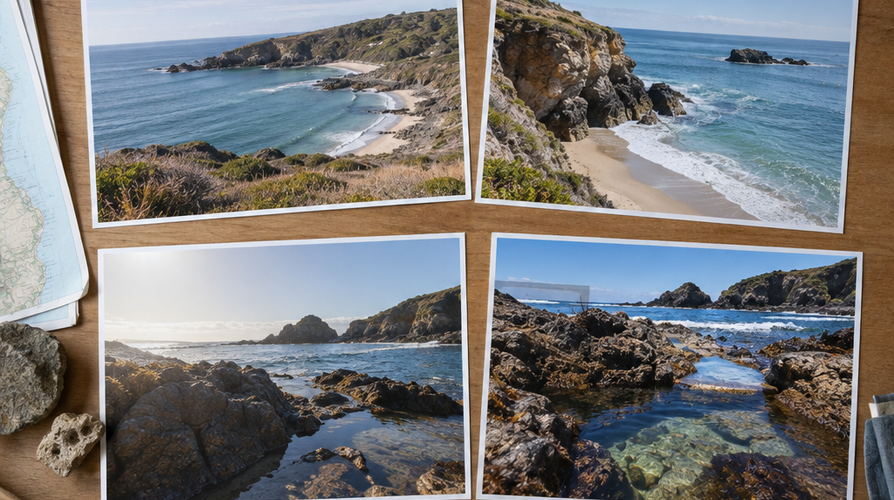
For a coastal return, check the tide forecast meticulously and arrive 30 to 45 minutes before the optimal light. This buffer ensures the composition can be locked in before conditions peak. While repeated visits yield deeper compositional control, this approach assumes the landscape itself remains structurally intact between seasons. Another visit adds very little value when the hour, lens, weather window, and visual problem remain entirely unchanged.
Diagnosing Location Fatigue in Repeated Frames
Location fatigue manifests as the exact same vantage point, the same dawn slot, and the same wide-angle recipe, even when the sky presents entirely different conditions. Diagnose this fatigue directly from the pictures rather than relying on the raw number of visits. Changing skies behind the same wide-angle arrangement signal a stagnant routine.
Diminishing returns arrive the moment the photographer stops posing a new visual problem and starts confirming a famous viewpoint. Habit mimics mastery. A marked tripod hole at a workshop overlook freezes seeing just as surely as a rushed first day in a new country. When the fifth visit reproduces the first visit's tripod position and wide-angle diagram, the extra mileage saved has not produced a new photograph.
Identifying Compositional Fatigue
Overlay or flip between your later selects to check whether the horizon, foreground anchor, and frame edges occupy essentially the same positions. If the later files are simply crops of the same diagram, the site is fatigued. On the next visit, test a completely different scale or vantage point rather than returning to the marked tripod position. If the later frames solve a different weather or scale problem, familiarity is still earning its keep.
Auditing Contact Sheets for Genuine Progression
Sort a working portfolio by location frequency first, then by the strength of the selects. Ignore how exotic the caption sounds during this phase of the edit. Make one contact sheet per site with the capture dates clearly visible. Place comparable first- and later-visit frames side by side to evaluate the actual progression of the work.
Judge whether the later files solve a different light, weather, or scale problem. Place first-visit keepers beside later-visit keepers from the same site and ask which frames show more specific light, an invented foreground, and sequence potential. This side-by-side comparison strips away the illusion of progress and reveals whether the repeated visits are generating new visual solutions or merely generating redundant files.
Set the next return as a single-constraint assignment. Choose one focal length, shoot at night instead of dawn, or target weather conditions previously avoided. Forcing a new constraint breaks the established routine and demands a fresh approach to familiar ground.
Auditing One Recurring Site Before Booking
Before paying a deposit on a new destination, pull a tight set of frames from one location already visited at least twice. Mark which later frames merely reprint the first visit and which ones could not have been made without local timing knowledge. Use the gaps in that specific set to define the parameters of the next shoot.
Pull first- and later-visit selects from one recurring location and mark each later frame as either a repeated composition or a distinct solution. Schedule one return to that exact site with a changed season, focal length, or shooting hour before deciding whether the portfolio needs another destination.










Reader Comments
The conversation starts with you.
Your Comment